


Quick Read:
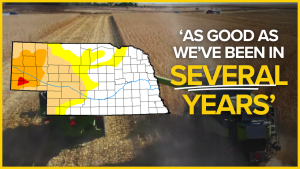
- Nebraska’s drought conditions have improved dramatically since August, with nearly half the state now free of drought and abnormal dryness.
- Much of central and eastern Nebraska has a strong soil moisture profile heading into winter, while western Nebraska still needs precipitation.
- Early projections suggest a wetter start to spring following several dry spring seasons.
Much of Nebraska is heading into winter with some of its best soil moisture conditions in years, a significant turnaround from the widespread drought that gripped the state just three months ago.
But parts of western Nebraska still need substantial precipitation before the next growing season.
Nebraska Extension climatologist Eric Hunt said recent rainfall has replenished soil moisture across much of central and eastern Nebraska, leaving those areas in a favorable position heading into winter.
“I think for moisture right now, this is probably as good as we’ve been in for a lot of us in several years,” Hunt said during a Monday interview with the Rural Radio Network.
The latest U.S. Drought Monitor shows 35.1% of Nebraska experiencing moderate drought or worse, down from more than 81% in August.
Severe drought coverage has fallen from nearly 55% to about 12%, while extreme drought now affects less than 1% of the state. No areas remain in exceptional drought.
Still, moisture needs vary considerably by region.
Hunt said the Panhandle and other portions of western Nebraska would benefit from a wet winter, including snowfall that could help replenish moisture ahead of spring planting.
In eastern Nebraska, recent dry weather has actually been beneficial, allowing fieldwork to continue while reducing excess topsoil moisture in areas where the soil profile is already relatively full.
Early projections also suggest a potentially wetter and stormier start to spring 2027, a departure from the dry conditions that have characterized recent springs.
“I would say on balance, that’s a good thing. It’s nice going into winter knowing that we actually have moisture. You don’t have to worry as much about drought.”
Despite the improvement since August, Nebraska remains drier than it was at this time last year, when just 17.22% of the state was experiencing moderate drought or worse.