


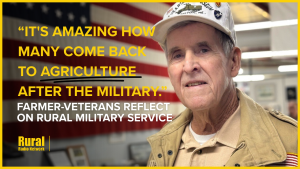
LEXINGTON, Neb. — Terry Lauby has spent much of his life around agriculture. The Dawson County farmer operates a row-crop and hay operation along with a commercial cattle feedyard.
But before building that career, Lauby spent four years in the U.S. Army, including a year in Vietnam.
Lauby served from 1965 to 1969 with the Army Security Agency. During his deployment to Vietnam, he worked on a direction-finding team, using radio equipment to locate enemy transmissions.
On Veterans Day, Lauby reflected on the connection between military service and rural America during a visit to the Heartland Museum of Military Vehicles in Lexington.
He said growing up on a farm helped shape his service.
“Growing up as a young man on the farm, with hired hands and uncles and dad, the crappy job was felt to the younger kids,” Lauby said. “So it was a blessing to go to the military to get out of the farm.”
Lauby has seen how many people return to agriculture after their military service.
“The farm life isn’t for everybody, and it’s kind of amazing how many come back and go back into it after the military experience,” he said.
That connection between military service and agriculture is reflected in Nebraska’s numbers. According to the latest USDA Census of Agriculture, 5,837 Nebraska farm and ranch producers have current or previous military service.
Lauby has another way of connecting those two worlds. He’s one of the founders of the Heartland Museum of Military Vehicles, which opened its permanent location in Lexington in the 1990s. The museum preserves and displays historic military equipment, including many operational vehicles.
For Lauby, Veterans Day is an opportunity to recognize the contributions of those who served, particularly in a state with deep roots in agriculture and patriotism.
“Nebraska has always been a patriotic home,” he said.
And while Lauby’s own military experience took him far from the farm, agriculture was waiting when he returned.