


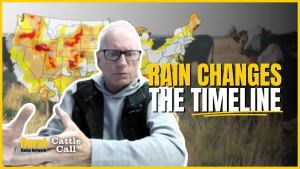
Recent rainfall across winter wheat country could delay when some cattle reach slaughter weight next year, potentially shifting finished cattle supplies from the second quarter of 2027 into the third quarter.
In this week’s episode of Cattle Call, Brad Kooima of KKV Trading says improved moisture conditions in the Southern Plains could encourage producers to graze calves on winter wheat rather than send them directly to feedlots, changing the timing of cattle marketings.
Kooima said dry conditions last year limited wheat grazing opportunities, forcing more calves into feedlots earlier.
“So if you’ve got a five-weight steer, last year you didn’t have any wheat pasture, so they went right to a feed yard. A feed yard that probably can get that calf to grow three or three point two pounds a day. Compared to this year, now that five-weight calf’s gonna go out on a wheat pasture where it’s maybe going to grow one and a half or two pounds a day.”
Those slower gains on pasture could push back when cattle reach market weight, potentially tightening the supply of finished cattle during the first half of next year.
“We’ve probably moved some fed cattle from the second quarter back to the third quarter when they’re going to be fat, is what I’m trying to say,” Kooima said.
The rainfall could also influence herd rebuilding. Kooima said adequate forage is a critical factor in whether cow-calf producers retain replacement heifers rather than sell them.
He pointed to lower-than-expected placements in the latest Cattle on Feed report as another possible indication of heifer retention. Meanwhile, unusually large numbers of cattle remaining on feed for 150 days or longer could be limiting pen space for incoming calves.
Although the effects of improved grazing conditions remain uncertain, Kooima said the potential shift in marketings is one of several factors supporting his outlook for early 2027.
“So all those little nuances like that still have me kind of friendly for the first half of next year,” Kooima said.
Other topics discussed on this week’s Cattle Call:
- Latest cattle-on-feed report and historically low placements
- Heavy cattle and the impact of extended feeding periods
- Heifer retention and signs of herd rebuilding
- Mexican feeder cattle imports and expectations for 2027
- Feedlot and packer leverage in negotiated cash trade
- Pork market weakness and broader protein demand