


The Trump administration announced $8 billion in additional financial assistance for U.S. farmers Monday, Oct. 19, as producers face higher fuel and production costs during the 2026 harvest.
The new Harvest Fuel Relief program will provide one-time payments to eligible farmers to offset a portion of economic losses associated with rising input costs and market disruptions.
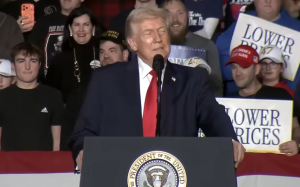
President Donald Trump announced the program Monday evening in Kansas. The U.S. Department of Agriculture will administer the assistance through its Farm Service Agency.
How will payments be calculated?
Despite the program’s focus on fuel costs, payments will not be based on individual producers’ diesel purchases or actual fuel expenses.
Instead, USDA says payments will be calculated using a national formula that considers:
- Planted acreage reported to the Farm Service Agency.
- USDA Economic Research Service cost-of-production estimates.
- Yield and price estimates from USDA’s World Agricultural Supply and Demand Estimates report.
The formula is intended to cover a portion of modeled economic losses for the 2026 crop year, similar to the approach used for the earlier Farmer Bridge Assistance program.
USDA plans to announce commodity-specific payment rates for Title I crops, which include corn, soybeans, wheat and sorghum, in November.
Payment details for other eligible commodities will be released later.
When can farmers apply?
USDA has not yet announced an application period or payment distribution dates.
Producers are encouraged to establish a Login.gov account and link it to USDA ahead of the application period. Farmers with linked accounts will be able to access pre-filled applications online once enrollment opens.
Unlike some previous USDA assistance programs, participation in Harvest Fuel Relief will not require producers to carry federal crop insurance.
USDA has not yet provided enough information for farmers to calculate their individual payments.
Additional assistance follows earlier farm payments
The $8 billion announcement follows several other federal assistance programs aimed at supporting producers facing financial pressure.
According to USDA, the Farmer Bridge Assistance program provided $12 billion in one-time payments to more than 560,000 farmers earlier this year.
The department also reports that nearly $14 billion in gross payments were recently provided through the Agriculture Risk Coverage and Price Loss Coverage programs. USDA estimates those payments were approximately $8 billion higher than they would have been without changes enacted under the Working Families Tax Cuts Act.
The new Harvest Fuel Relief payments will be funded through the Commodity Credit Corporation, USDA’s federal financing mechanism for agricultural support programs.
For Nebraska row-crop producers, the next major announcement will come in November, when USDA is expected to release payment rates by commodity.