


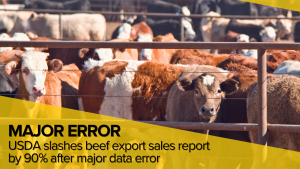
A major correction to U.S. beef export data is raising new questions about the reliability of government market reports at a time when cattle supplies are historically tight and prices remain elevated.
The U.S. Department of Agriculture on Thursday cut its reported late-June beef export sales by about 90% after determining incorrect data had been submitted and published in an earlier report.
The original report showed U.S. beef exporters sold more than 126,000 metric tons of beef during the week ending June 25 – a nearly 500% increase from the previous week. The revised figure puts sales at just over 12,000 metric tons.
The correction followed concerns from traders and market analysts who questioned whether the unusually large purchases were realistic, particularly sales originally reported to countries including Chile and Italy. USDA later revised those figures from tens of thousands of metric tons to only a few hundred tons each.
The agency said it received incorrect export sales information and published the data in its weekly report. USDA officials said data accuracy and integrity remain top priorities and the agency is reviewing reporting procedures following the error.
The revision comes as the U.S. cattle industry faces some of its tightest supplies in decades. Record-high beef prices, strong consumer demand and reduced cattle numbers have increased attention on every market signal, including USDA export reports that producers, exporters and traders use to make business decisions.
The reporting mistake also comes as USDA has experienced significant workforce reductions. More than 24,000 employees have left the department since early 2025, according to U.S. Office of Personnel Management data, reducing the agency’s workforce by nearly 27%. The National Agricultural Statistics Service, which collects and publishes crop and livestock data, has seen its staffing decline by about 37%, according to the federal workforce data.
Analysts say confidence in those reports is especially important during periods of volatility, when even a single data point can influence expectations for cattle prices and demand.
The USDA’s Foreign Agricultural Service also recently transitioned to a new export reporting system, though the agency has not indicated the system change caused the reporting error.