


Funding for this series is made possible by the Specialty Crop Block Grant Program, a USDA-funded initiative supporting specialty crop producers.
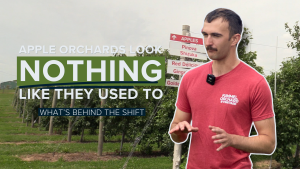
The next generation of apple orchards is taking shape with smaller trees, tighter spacing and growing systems that look much different than traditional orchards.
At Kimmel Orchard near Nebraska City, orchard manager Caleb Wehrbein says apple production is evolving toward high-density growing systems that produce more fruit while making orchards easier to manage.
Traditional orchards feature large, widely spaced trees. Today’s newer plantings, however, can place trees just one to three feet apart on wire trellises designed to support both the trees and heavy fruit loads.
“A lot of what we’re seeing in the industry is shifting to a high-density production system… The reason why we plant them on the trellis is because when we plant so densely in these tight spaces, you kind of need that wire to help support the weight of the apple trees and the fruit that’s being borne off of them.”
The shift is one example of how orchards continue adapting to produce high-quality fruit despite Nebraska’s challenging growing conditions.
Unlike annual row crops, apple production is a year-round commitment. While many assume orchard work slows after harvest, Wehrbein says winter is one of the busiest seasons.
“Unlike a lot of other crops, in the wintertime we’re actually still busy because we are in the trees pruning the canopies to make our sprays more effective and reduce the disease pressure we see often in the Nebraska climate. During the spring and summertime, we’re busy putting on protectants, scouting for insects, disease pressure and general maintenance of the property.”
Nebraska’s climate presents challenges that many fruit-growing regions don’t face. Herbicide drift from neighboring row crop fields, hot and humid summers, insect pressure and inconsistent rainfall all require careful management.
Still, Wehrbein says those efforts pay off by giving visitors access to fresh fruit and apple varieties they rarely find in grocery stores.
“There’s a lot of different apple varieties that we do sell that you don’t see typically in grocery stores… there’s just a lot of fun varieties people can try.”
Kimmel Orchard grows roughly 50 acres of specialty crops, including apples, peaches, grapes, cherries, berries and pears. In addition to production, the orchard partners with the University of Nebraska–Lincoln on research and education, helping introduce new ideas and technologies that continue to shape the future of Nebraska orchards.