


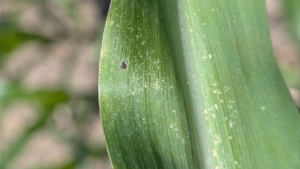
Tar spot, a fungal disease that can reduce corn yields, has now been confirmed in 15 Nebraska counties as growers enter a critical period for scouting fields and monitoring disease pressure.
According to maps published by the Crop Protection Network, tar spot has been reported in 17 counties as of June 22. The disease has spread steadily across Nebraska since it was first detected in the state in 2021, with 60 of Nebraska’s 93 counties having reported at least one case.
The counties with confirmed tar spot this season include Holt, Antelope, Pierce, Boone, Greeley, Nance, Cuming, Merrick, Buffalo, Hall, Hamilton, York, Saunders, Adams, Clay, Franklin, and Webster counties.
Tamra Jackson-Ziems, a University of Nebraska-Lincoln Extension plant pathologist and professor, said the early-season detections are not unusual and should not prompt immediate fungicide applications.
“This is not a cause for alarm or panic,” Jackson-Ziems said.
Tar spot causes small black lesions on corn leaves and can reduce photosynthesis when infections become severe. While the disease is currently being found at low levels, Jackson-Ziems said recent rainfall in some areas and irrigation in others have created favorable conditions for its development.
She encouraged producers to begin scouting fields, especially irrigated acres, and watch for disease movement through the canopy over the coming weeks.
Nebraska Extension is not recommending fungicide treatments at this time. Research has shown the best return on investment typically occurs when fungicides are applied between tasseling and the milk stage of corn development if disease pressure warrants treatment.
Jackson-Ziems said producers should focus on monitoring disease levels rather than making preventive applications too early in the season.
In addition to tar spot, Extension specialists continue to monitor for southern rust, another potentially damaging corn disease. So far, there have been no reports of southern rust activity in the southern United States, where the disease typically originates before moving northward.
Additional disease information, scouting resources and tracking maps are available through Nebraska Extension’s CropWatch program and the Crop Protection Network.