


Federal animal health officials have confirmed two additional cases of New World screwworm in Texas, bringing the total number of detections in the United States to four since the pest was first identified in the country earlier this month.
The U.S. Department of Agriculture’s Animal and Plant Health Inspection Service announced Monday that New World screwworm was confirmed in a calf in La Salle County, Texas, and a dog in Andrews County, Texas.
The latest detections follow two earlier cases identified in Texas. The first case was confirmed June 3 in a calf in Zavala County near the Texas-Mexico border. A second infected calf was identified June 5, also in Zavala County, approximately 5.6 miles from the original detection.
USDA said epidemiological investigations are ongoing for the two newest cases. Early reports indicate the infected dog had recently been in Mexico.
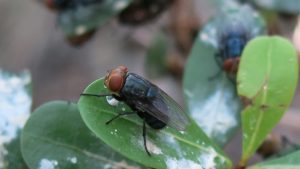
New World screwworm is a parasitic fly whose larvae feed on the living tissue of warm-blooded animals. The pest can cause severe wounds, suffering and death if left untreated. It poses a threat to livestock, pets, wildlife and, in rare cases, humans.
“Over the past week, USDA has identified and expeditiously confronted four confirmed detections of New World screwworm,” said Dudley Hoskins, USDA under secretary for marketing and regulatory programs. “While we address these instances that require immediate attention, and continue to sample suspected cases, we are simultaneously working to eradicate the pest entirely.”
For each confirmed case, officials establish a roughly 12-mile (20-kilometer) infested zone that includes quarantines, movement controls and increased surveillance. Additional trapping efforts are also underway along the border and outside affected areas.
USDA has also activated its sterile fly dispersal facility at Moore Air Base in Edinburg, Texas. Aerial releases of sterile screwworm flies are scheduled to begin this week as part of the agency’s eradication strategy.
The sterile insect technique was the primary tool used to eliminate New World screwworm from the United States decades ago. Sterile male flies mate with wild females, preventing reproduction and gradually reducing pest populations.
Federal officials are urging livestock and pet owners to closely inspect animals for draining wounds, maggots, egg masses, signs of discomfort and lesions around the nose, ears, genitalia or umbilical area.
USDA emphasized that the U.S. food supply remains safe, noting that New World screwworm does not infest meat or other food products and that affected animals would be identified during inspection before entering commerce.