


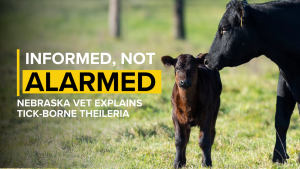
Nebraska cattle producers are being urged to stay informed but not alarmed about Theileria, a tick-borne cattle disease recently detected in parts of the state and surrounding region.
Dr. Jared Walahoski of Overton Veterinarian Services said the issue is less about widespread local exposure and more about cattle movement from higher-risk areas.
Key takeaways for producers
- Theileria is spread primarily by the Asian Longhorned Tick, which has not been found in Nebraska but is present in nearby states.
- The highest current risk is from incoming cattle sourced from regions where the tick is established.
- Nebraska is considered generally low risk for long-term tick establishment, though southeast areas may be more vulnerable.
- The disease is blood-borne and can also spread through contaminated equipment such as needles.
- There is no vaccine or highly effective treatment available, making prevention the main strategy.
What the disease does
Theileria infects red blood cells, causing:
- Anemia
- Lethargy
- Reduced appetite and performance
- In some cases, abortion in bred cattle
While death loss is typically limited, infected animals can become lifelong carriers.
What veterinarians are saying
“The greater risk for the rest of the state is for incoming cattle from those areas of the country where the tick is more prevalent,” Walahoski said.
“It’s not necessarily home here, but it is moving our direction.”
What producers should do
- Work with a veterinarian when sourcing cattle from out of state
- Watch for heavy tick infestations and signs of illness
- Use approved external parasite control products as needed
- Submit suspect ticks or blood samples for diagnostic testing
Testing is available through UNL’s Vet Diagnostic Lab using PCR on blood samples.
Veterinarians say the focus remains on prevention and biosecurity as monitoring continues across the region.