


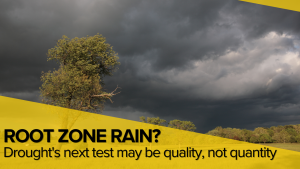
Recent rainfall across parts of Nebraska may have slowed the state’s slide deeper into drought, but a Nebraska Extension climatologist says the bigger question is whether summer storms can deliver the kind of moisture that actually replenishes soils.
Dr. Eric Hunt said portions of central and western Nebraska picked up beneficial precipitation over the weekend, but heavy downpours may not have done as much good as rainfall totals alone would suggest.
“When we’re dry, as we have been across some portions of the state, your soil is almost sort of hydrophobic after a while, meaning that you need just a kind of a nice, steady, gentle rain to sort of loosen things up a little bit. Then water will infiltrate better.”
Hunt said hard, fast-moving thunderstorms common during the summer can lead to runoff rather than soil recharge, particularly in drought-stricken areas where moisture deficits extend deep into the soil profile.
While he remains cautious about declaring an end to drought concerns, Hunt said conditions may be stabilizing after months of deterioration.
“I’m sort of cautiously optimistic that we maybe have hit the worst point for drought in the state.”
Nebraska is expected to see additional chances for rain and thunderstorms over the coming weeks, but Hunt said widespread drought recovery will depend less on the number of storms and more on how effectively moisture reaches the root zone.
He said eastern Nebraska generally remains in better shape, while conditions worsen significantly west of Highway 81.
The drought’s impacts are also creating secondary concerns, including a multi-vehicle accident on Saturday on I-80 near Ogallala.. Hunt noted that large areas of bare ground, including fields left unplanted because of poor moisture conditions, could contribute to blowing dust hazards when strong thunderstorm winds develop.
“There is literally no deep moisture for a lot of farmers across central western Nebraska this year.”
Hunt said those dry conditions are one reason some producers have considered prevent-plant insurance options. He also warned that gust fronts ahead of thunderstorms can produce sudden visibility reductions when loose soil is picked up and blown across roadways.
Despite the challenges, Hunt said forecast models currently show periodic chances for precipitation across Nebraska and do not indicate an extended stretch of completely dry weather.
“I think we should see enough moisture to at least try to keep some things going,” he said. “The challenge will be whether that moisture is actually improving conditions on the ground.”