


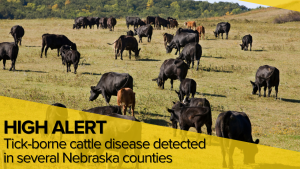
Nebraska cattle producers are being urged to stay alert after cases of Theileria, a tick-borne cattle disease, were detected in several Nebraska counties.
The parasite is primarily spread by the Asian Longhorned Tick, which has not yet been found in Nebraska but is now established in 26 other states.
“What this organism does is infect red blood cells,” said Dr. Craig Payne of the University of Missouri. “Those red blood cells are damaged. They’re lost in circulation or removed by the body. And that anemia that is a result of that red blood cell destruction or loss is what’s causing these clinical symptoms that we’re seeing.”
University of Nebraska researchers say neighboring states including Iowa, Kansas and Missouri have already reported detections, although it remains unclear whether Nebraska’s climate is suitable for long-term tick establishment.
The disease can cause anemia, weakness, loss of appetite and, in severe cases, death in infected cattle. University researchers also note infected animals become lifelong carriers, increasing the risk of spreading the disease through ticks, needles or other blood-contaminated equipment.
“Considering there’s no vaccines or antimicrobials effective against this organism, what most people are focusing on right now is just controlling tick populations such as the Asian Longhorned Tick specifically because it’s again, the primary vector,” said Payne.
State Veterinarian Dr. Roger Dudley says the best prevention is strong tick control and good herd management practices, especially during the summer months when ticks are most active.
Producers are encouraged to work closely with their veterinarian and regularly inspect cattle for signs of ticks or illness.