


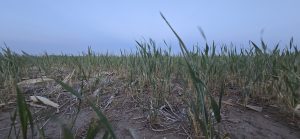
LODGEPOLE, Neb. – A Nebraska Panhandle farmer says this year’s winter wheat crop is “a complete disaster and failure” after months of dry weather and unusually warm winter conditions battered fields across the region.
Pete Miller, who farms north of Lodgepole with his family, said last fall initially brought promising conditions for winter wheat.
“When we planted it in the middle of September, we had excellent moisture, probably the best planting conditions we’d had in a long time,” Miller said. “Came up fast. It grew good.”
But conditions quickly deteriorated.
“After that it just quit raining and didn’t snow all winter,” Miller said. “Hasn’t rained all spring here. It’s just been a train wreck.”
Miller said the wheat crop never fully went dormant because of warm winter temperatures, adding additional stress to already dry conditions.
Now, many producers are weighing difficult decisions about whether to harvest struggling wheat fields, abandon crops or plant something else.
“You can call crop insurance and start a claim and either abandon it or kill it off and plant something else into it,” Miller said. “I’m not sure what to do. There’s a lot of people in the same boat.”
He said losses appear widespread across the region.
“It’s the first time pretty much every wheat field out here is going to be a loss probably, and just a wreck,” Miller said.
Ben Rand, a crop insurance agent based in Chappell with Federal Crop Agency, said producers with multi-peril crop insurance should report crop damage quickly.
“Folks that are facing these really challenging wheat conditions, they need to get ahold of their crop agent and get something turned in,” Rand said.
Rand said producers who insure a second crop behind failed wheat would receive 35% of their wheat payment, while those who do not insure the second crop would receive 100% of the wheat payment.
“We’re hearing a lot of talk about millet. Milo,” Rand said.
Despite the difficult conditions, Miller said producers continue pushing forward and hoping for rain.
“The old timers say you’re one day closer to rain, I guess,” Miller said. “That’s all you can do.”