


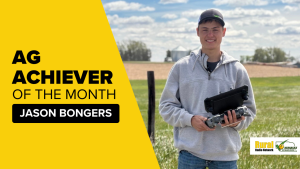
The Ag Achiever of the Month is presented by the Nebraska Soybean Board.
What started with an $800 grant and a small camera drone has turned into a growing agricultural business for East Butler senior Jason Bongers, who is betting the future of crop application includes more drones flying over Nebraska fields.
Bongers recently launched Next Level Ag, LLC, a custom drone application business serving farmers and ranchers in east-central Nebraska with fungicide, herbicide and insecticide spraying. While still finishing high school and preparing for college, he is already navigating certifications, marketing and the realities of operating a business.
“I learned that I could make good money with the business with the spray drone,” Bongers said. “I kind of just figured out the steps of what I needed.”
The business grew out of an early interest in drones that intensified after Bongers received funding through the Nebraska FFA Foundation. He first used a small drone to capture photos and videos of crops and cattle before deciding to invest in a larger agricultural spray drone this spring.
Now, Bongers is targeting seasonal application work ranging from pasture spraying for noxious weeds in the spring to fungicide applications on corn and soybeans later in the summer. He is also exploring adding cover crop seeding capabilities in the future.
One of the biggest surprises, he said, has been how weather controls the business.
“It’s never not windy in Nebraska,” Bongers laughed. “If you can spray for just a couple hours out of the day, you’re doing pretty good.”
Bongers said another challenge has been building a business in an area where few operators are using agricultural drones commercially. Without nearby mentors to lean on, he worked with a Nebraska drone company to navigate certifications and licensing requirements.
“There’s no neighbor to call up and ask him how he did this or how he did that,” he said.
Despite misconceptions about drone application technology, Bongers said the equipment is capable of covering ground quickly and efficiently. His drone carries 13.2 gallons and can cover more than 50 acres per hour.
Industry interest in drone applications has grown as producers look for more precise application methods, particularly in situations where traditional ground rigs may damage crops or struggle in wet conditions.
Bongers credits FFA for helping launch the business, both financially and through networking opportunities.
“I probably wouldn’t be doing this if it wasn’t for FFA,” he said.
For now, Bongers plans to spend the summer balancing the startup alongside full-time work as a technician at AKRS Equipment while learning how much business he can handle before expanding further.
“This summer is going to be just a learning year,” he said. “Next year I can really hit it hard.”