


For four days each November, Bethesda Mennonite Church becomes a hub for the Mennonite Central Committee’s mobile canning operation. Volunteers ranging in age from 4 to 92 help turn turkey into shelf-stable meat for hunger relief.
After harvest and before Thanksgiving, farm families gathered around a different kind of turkey dinner.
There was no stuffing or pumpkin pie. Instead, volunteers at Bethesda Mennonite Church in Henderson turn truckloads of turkey into thousands of cans of meat — food that may eventually reach people facing hunger thousands of miles away, or families just down the road.
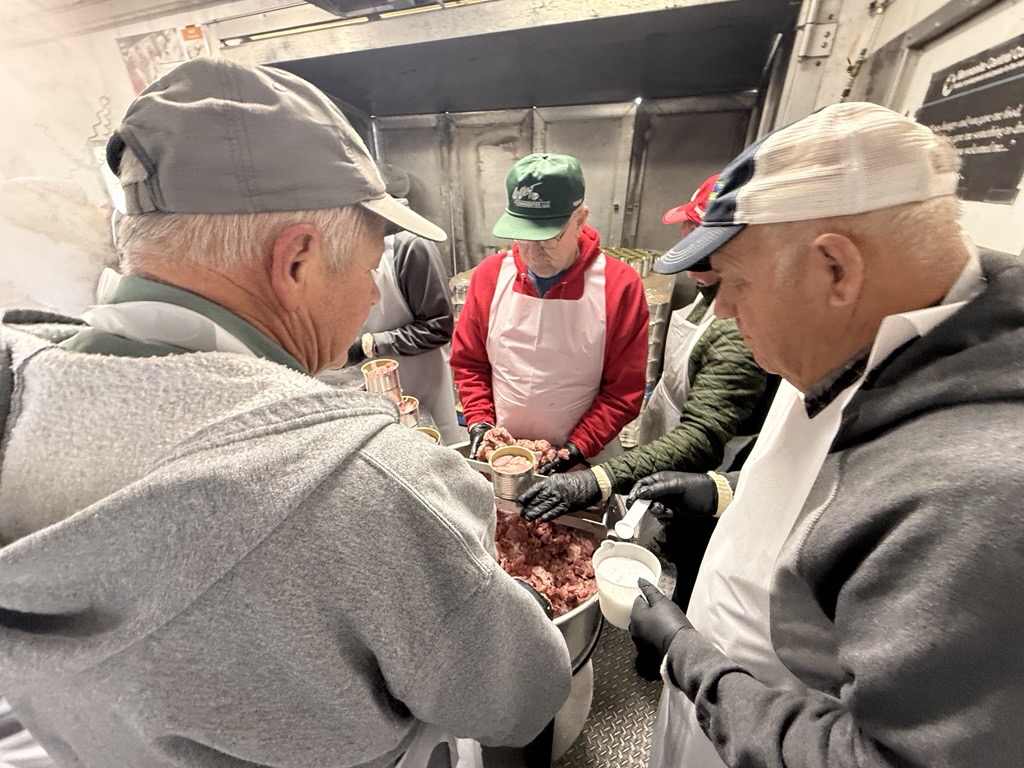
Inside the church’s Fellowship Hall, the work begins with pieces of dark-meat turkey. Volunteers drain the meat, feed it through a grinder and carry tubs of ground turkey outside to a large white semi-truck parked beside the church.
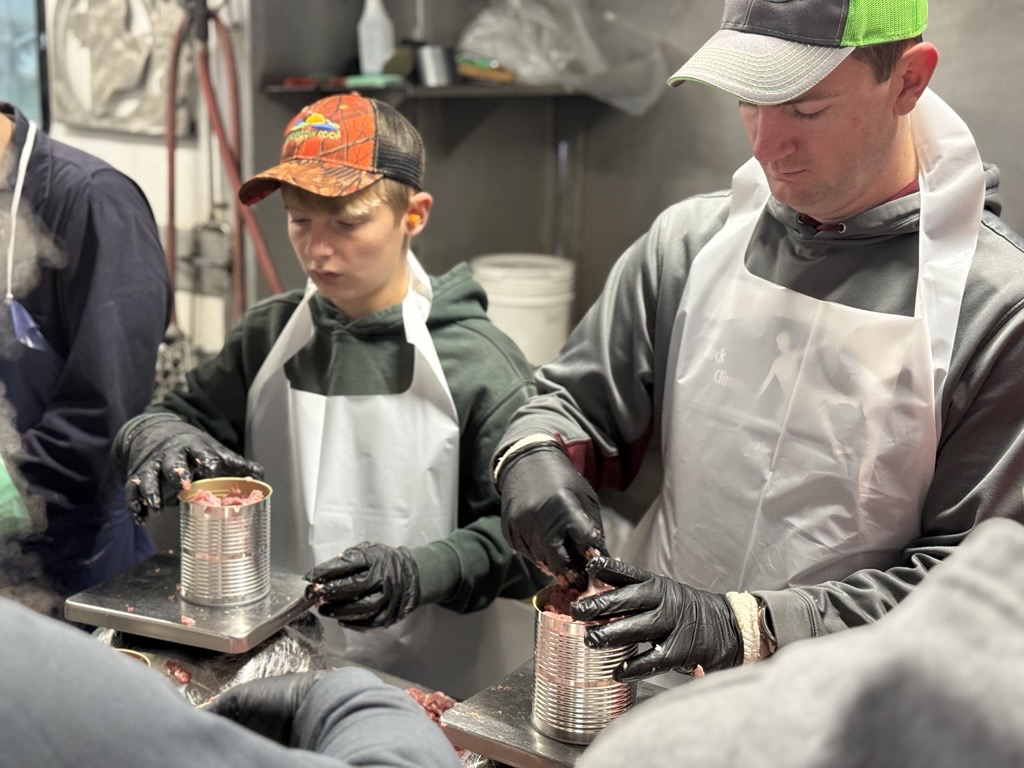
The truck is the Mennonite Central Committee’s mobile canning unit. Inside, volunteers fill cans to the proper weight before machinery seals them and the meat is cooked under pressure.
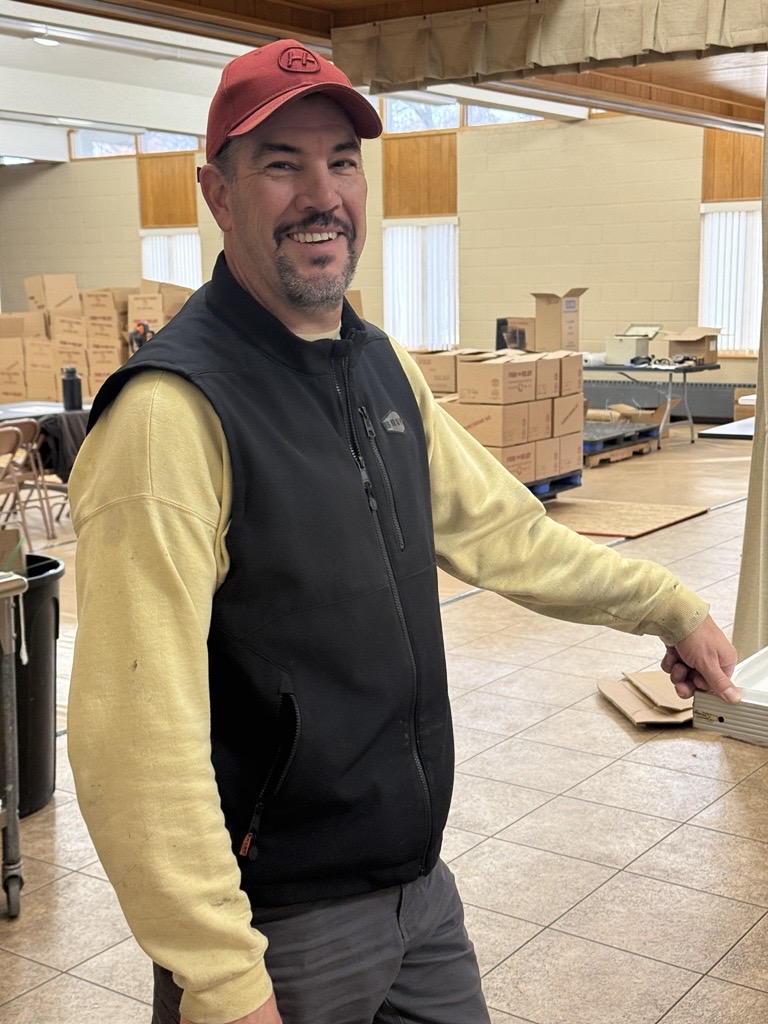
Jay Dee Janzen, one of the coordinators of the operation, describes it as a fully regulated food-processing facility.
“This is a fully USDA-inspected meat canning facility,” Janzen said. “So what we are doing here, in a nutshell, is we’re taking raw meat products and canning it.”
The process takes place over four days, with dozens of volunteers helping on the canning line and others pitching in with packaging. The work can begin before 6 a.m. and continue into the evening.
The result is food intended for relief and humanitarian aid.
“The end result is food for relief,” Janzen said. “The piece on our boxes, it says food for relief and humanitarian aid. So this meat will go as far away as Ukraine, and we’ll stay as local as York County.”
A tradition with roots in postwar relief
The canning effort has a history that stretches back to the years following World War II.
Janzen says Mennonite families in Europe reached out to relatives in the United States, asking for help. At first, families here canned food they had grown or raised themselves and sent it overseas.
That grassroots response eventually developed into a coordinated effort through Mennonite Central Committee. A mobile cannery was established in the 1950s, and Henderson became one of its regular stops not long afterward.
“It has been a community invention,” Janzen said. “Most churches were involved, and it originated on farmyards or … one of the early places was the blacksmith shop.”
The operation has moved between churches in Henderson over the years, but it is now consolidated at Bethesda for logistical reasons. The meat has changed, too. The project once involved donated sides of beef; in other years, volunteers have canned chicken. This year, it’s turkey.
Janzen has been involved in the project in one way or another since the 1980s. He’s been in a leadership role for nearly 20 years.
And the volunteers aren’t limited to members of Bethesda or even residents of Henderson. People travel from other Nebraska communities to help, including volunteers from Lincoln and Wood River. Janzen recalls one man who came from St. Paul after reading about the project.
Anyone is welcome to participate.
A community effort, across generations
The volunteer roster spans generations. Janzen says he has seen children as young as 3 or 4 helping alongside a volunteer who is 92.
Jason Lewis, who helps coordinate the operation with Janzen, says that communal aspect is one of the things he enjoys most.
His own children grew up coming to the canning project. When they were young, they sometimes found their own way to contribute — or at least stay entertained.
Lewis remembers his oldest child, now 23, saying, “I love canning.”
Then came the clarification: “No, I like playing in the boxes.”
For Lewis, the project is also a chance to make a direct connection between the work of producing food and the people who need it.
Many of the volunteers are farmers. After harvest, the timing can offer an opportunity to step away from the farm and take part in something with a visible result.
Lewis says farming can leave producers several steps removed from the people who ultimately eat what they grow but here they have heard from those who have received the food.
From York County to humanitarian aid
The canned meat is distributed through Mennonite Central Committee’s relief network. Some stays closer to home, with Janzen naming Blue Valley Community Action in York, Matt Talbot Kitchen and the Food Bank of Lincoln among organizations that have received donations.
Other product can be sent farther away, including through international relief efforts.
Janzen recalls hearing from an MCC worker about a woman overseas who received a can of meat. The food helped make it possible for her children to attend school, he said, and she was able to stretch that one can to feed her family for a week.
It’s a reminder that the value of the food may extend well beyond what’s inside a single can.
The project is a substantial undertaking. Janzen estimates the operation costs around $70,000, and it relies on volunteers and financial support to keep going.
Those who return year after year don’t need to be convinced it’s the right thing to do, and if they do need a reminder, a Bible verse displayed in the truck tells the story.
It comes from Matthew 25: “I was hungry, and you gave me food.”
For Janzen, the message is a call to help people wherever the need exists.
At Bethesda Mennonite Church in Henderson, that’s not just a memory verse to learn as a kid, it’s something to be lived out together for a lifetime.