

Before Runza became a Nebraska staple, Donald Everett Sr. was selling sandwiches out of a used mail truck outside Memorial Stadium. More than 70 years later, the family business has grown to 93 restaurants, with the fourth generation beginning to step into the business.
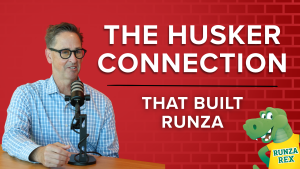
Donald Everett Jr., president of Runza, joined Building Nebraska to talk about how the restaurant got its start, what has kept it growing and what it takes to run a family business across generations.
The story started in 1949, when Everett’s grandmother opened the first Runza restaurant in Lincoln. She wanted to give her brother a place to work after he returned from military service. The restaurant served a sandwich familiar to Germans from Russia, the family’s heritage, though his grandmother gave it a name of her own.
His father took the next step in 1966, opening a second restaurant across town. Several banks had turned him down for a loan, so his mother lent him $500 to get started. From there, he built the business into a chain of more than 30 locations.
“He just had those the entrepreneurial DNA and was quite an infectious leader,” Everett said of his father.
That leadership shaped how the company grew. His father helped employees open their own restaurants, sometimes investing in their businesses or lending them money. Some of those employees went on to become franchise owners.
Everett and his two sisters grew up working in the restaurants, starting at age 12. After graduating from the University of Nebraska–Lincoln, all three joined the family business. Everett has served as president since 1997, and the siblings have spent decades building on what their father started.
Today, Runza operates 93 restaurants, including 50 company-owned locations. The company has also started preparing for its next leadership transition, with two members of the fourth generation now involved in the business.
Growth has brought its own challenges, particularly outside Nebraska. Everett said the Runza sandwich is a big part of the company’s identity, but it can also be a tough sell in places where customers aren’t familiar with it. The company has found success in neighboring states, including Colorado, Kansas, Iowa and South Dakota, and expects future growth to focus on markets close to its existing locations.
Runza has also continued opening restaurants in smaller Nebraska towns, including communities with around 1,500 people. Everett said the people who run those restaurants play a major role in making them work.
“We don’t open franchises without owner operators,” Everett said. “It’s their business, it’s their livelihood. They’re in there on the regular.”
The company also gives managing partners at many of its company-owned restaurants an ownership stake, allowing them to share in the business’s financial success.
Some of Runza’s biggest traditions started with the same kind of personal relationships. Everett’s father played football at Nebraska before leaving the team to focus on the family business. He remained on good terms with coach Bob Devaney, and eventually began selling sandwiches outside Memorial Stadium from a used postal service truck.
That arrangement eventually brought Runza inside the stadium. On a busy Husker football Saturday, the company can sell 15,000 to 16,000 sandwiches. Restaurants across Lincoln prepare the sandwiches ahead of time, and employees help bake, wrap and distribute them on game day.
For Everett, the lessons behind the business go beyond selling sandwiches. His grandmother started a restaurant at a time when women business owners were far less common, and his father took chances when others told him no. Both helped shape how Everett approaches running the company today.
“Don’t be afraid to fail and, and continue that serial entrepreneurship spirit,” Everett said.
As Runza looks toward its next chapter, Everett said the goal is to keep growing without losing the connection the company has built with Nebraska. The business may have come a long way from a used mail truck, but its family roots remain central to how it operates.
Building Nebraska is produced by the Rural Radio Network in partnership with the Engler Agribusiness Entrepreneurship Program at the University of Nebraska–Lincoln.