


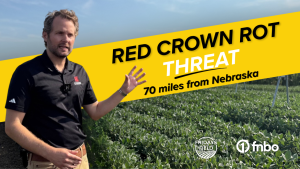
August is an important time for Nebraska soybean growers to be scouting fields for disease, with several issues beginning to show up and a new disease threat moving closer to the state.
Dylan Mangel with Nebraska Extension says soybean disease pressure has not fully taken off yet, but conditions in August can determine whether problems become more widespread.
“There’s a lot of stuff around, but it’s just not really taken off quite yet. And that’s usually how it is most years. It’s really August when it decides if it’s going to go for it or not. And it really comes down to conditions. So what do we have for rain? What do we have for humidity? What do we have for heat?” Mangel said.
White mold and frogeye leaf spot are among the diseases being monitored, but Mangel says red crown rot is a newer concern for soybean producers.
The disease has been confirmed in southwest Minnesota, about 70 miles from Nebraska, and has also been moving west from other areas.
Red crown rot can be difficult to identify because its above-ground symptoms can resemble sudden death syndrome. Mangel says growers should be paying close attention when they see bright yellow symptoms in their soybean fields.
“It’s going to look like sudden death syndrome of soybean, whereas those bright yellow foliar symptoms. The problem with that symptom is it’s so vibrant. Everyone can see it from their truck and says sudden death syndrome. I’m not going to go look at it. So that could be red crown rot, that could be here and could be around. It’s only 70 miles from Nebraska,” Mangel said.
Red crown rot is a root rot pathogen that affects the crown of the soybean plant. The disease can interfere with water movement and resource movement within the plant and can lead to significant yield loss.
Mangel says researchers are still learning about the disease, including how it is spreading across the country. However, growers have some management tools available.
Seed treatments can be effective, but scouting and documenting where the disease is found will also be important. Mangel says identifying affected areas can help growers make future management decisions and avoid spreading the disease around their farms during harvest.
August scouting is especially important because some soybean diseases have a long period between infection and when symptoms become visible.
White mold, for example, may already be established in a plant before symptoms appear. By the time growers see the disease, it may be too late to effectively treat the infection.
“Make sure you know what it is because disease management is going to be disease specific,” Mangel said.
With several soybean diseases being monitored and red crown rot moving closer to Nebraska, growers are encouraged to spend time scouting fields now and documenting anything unusual they find.
Fridays in the Field is brought to you by FNB — The Great Big Small Bank.