


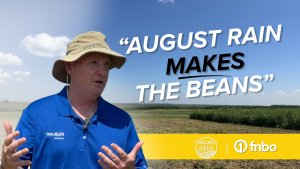
After an unusually cool and dry start to the growing season, Nebraska soybean fields are beginning to look much different than they did just a few weeks ago.
Speaking during this week’s Fridays in the Field near Beaver Crossing, BASF Technical Service Representative Nate Quam said recent rainfall and warmer temperatures have helped soybeans catch up as they enter critical reproductive stages.
“We were pretty dry early on and we started out fairly cool. So beans were kind of slow off the out of the gate, but we’ve kind of picked up some rain, picked up some heat. They’ve really taken off here as they started flowering and they’re looking a lot better,” Quam said.
With flowering underway and pods beginning to develop, growers are now shifting attention toward fungicide timing while wrapping up post-emergence weed control.
One concern earlier this season was whether dry conditions would limit the effectiveness of residual herbicides. Quam said many products remain effective once moisture finally arrives.
“Those products, such as BASF’s, will lay there on the soil surface and still be there. Once you get that rainfall, they don’t break down very quickly and then they’ll do their job,” he explained.
The interview took place at BASF’s research plot, where heavy weed infestations are intentional. Researchers seed troublesome weeds such as waterhemp, velvetleaf, and foxtail to evaluate herbicide performance under some of the toughest conditions possible.
As summer progresses, Quam said weather during the next several weeks will play a major role in determining soybean yields.
“We all know August rains make the beans. So hopefully we keep getting some rain,” Quam said.
While soybeans continue to improve, Quam also encouraged growers to stay on top of fungicide applications in corn as disease pressure begins to increase across parts of the state.
The growing season still has a long way to go, but with improved moisture and warmer temperatures, Nebraska’s soybean crop has gained momentum heading into one of its most important yield-building periods.