

Cattle Call is an original production of the Nebraska Rural Radio Association and is presented Blue Chip Herefords – Oxford, Nebraska.
The rapid growth of beef-on-dairy crossbreeding is reshaping the U.S. cattle industry, improving carcass quality but raising concerns about market control, an analyst says.
The practice – breeding dairy cows with beef semen – has helped dairy producers offset weak milk prices while adding a steady supply of uniform cattle to a historically tight beef market.
But some independent feeders worry the system’s reliance on contracts and predictable supply gives large meatpackers more leverage and reduces open cash market bidding.
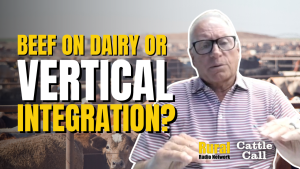
In this week’s episode of Cattle Call, Brad Kooima, an analyst with KKV Trading, says the shift could accelerate industry consolidation.
“What I also worry about is the philosophical part of this thing. I worry that, as I’ve said over and over, that this allows vertical integration more so than it’s ever had in the cattle industry before,” Kooima said. “It makes me worry about what happened to chickens and hogs.”
Higher use of crossbred cattle and longer feedlot times have pushed more beef into the Choice and Prime grades. The Choice-Select spread has widened to about $20, though Prime premiums have softened due to heavier supplies.
Kooima says the concern is how packers use captive supplies to reduce cash market participation.
“I worry that we’re going to lose leverage because of beef on dairy. I worry that when you shift that balance just enough that the packer’s got enough formula priced cattle, enough turn-in cattle, enough captive supply cattle, use whatever term you want, cattle that he doesn’t have to bid on,” he said.
He says feeders currently hold leverage due to tight cattle inventories, but warns that could change as herds rebuild.
Other Topics:
- Late-Week Cash Trade Dynamics: Late Friday cash trade pushed to $260 in Western Nebraska and Kansas, led curiously by a major packer rather than a regional operator, which is typically a more positive indicator for independent leverage.
- Post-Fourth of July Seasonal Demand: Expectation that middle meat prices (such as steaks) will face seasonal downward pressure after the holiday as consumer demand shifts toward grilling staples like hamburgers and hot dogs.
- Dairy Economics and Herd Replacement Limitations: Dairy operations are leaning heavily on day-old beef-on-dairy calf sales (commanding anywhere from $1,500 to $2,000) as primary profit centers, though they may face limits soon as they struggle to retain enough pure dairy replacement heifers.
- New World Screwworm Impact: The market appears to be taking the 19 reported cases of New World screwworm in Texas entirely in stride, with zero reported cattle deaths and minimal disruption to broader trade fundamentals despite localized border anxieties.
- Packer Shackle Space Reductions: The upcoming mid-August closure of the Tyson Foods plant in Perry, Iowa (referred to in-stride as the Sodderton closure) will remove critical slaughter capacity (“shackle space”), though tight current supplies mean packers still lack immediate market leverage.
- Upcoming Summer Heat Management: Anticipation of the summer’s first sustained 100-degree heat blast across the Plains, which historically incentivizes producers to market fat cattle more aggressively to mitigate death loss risks.