

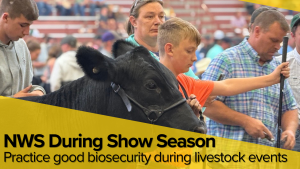
Make sure to bring home ribbons and banners but leave pests behind as livestock show season brings heightened interest this year because of the evolving New World screwworm situation. The pest is not a beef quality or food safety issue, but it can create serious animal welfare concerns when larvae infest wounds in warm-blooded animals.
“It’s always important to stress the fact that beef is safe,” said Dr. Lindsay Waechter-Mead, Nebraska Extension beef educator. “This is not affecting beef quality whatsoever. It’s definitely an animal welfare concern.”
Waechter-Mead said the issue is especially relevant during show season because animals travel extensively and often commingle with livestock from multiple states. While Nebraska is not currently affected, increased livestock movement can raise the risk of moving pests, pathogens or other unwanted “hitchhikers” home from a show.
“Anything that has touched your animals and then touches another person’s animal has the potential to spread stuff,” she said. “We just want to be extra cautious, no matter where you’re going, that we’re following those basic biosecurity principles.”
Check requirements before leaving home
Every state sets its own requirements for importing livestock. In most cases, animals crossing state lines need a certificate of veterinary inspection, commonly called health papers, completed by a USDA-accredited veterinarian before travel.
Waechter-Mead said exhibitors should contact their veterinarian early because some requirements can take multiple days to complete. They also should verify destination-state rules with the appropriate state animal health department and check with show organizers for any additional exhibition requirements.
“This is a very fluid situation, meaning things change every day,” she said. “It’s really, really important to contact the state that you’re going to.”
Exhibitors returning to Nebraska should review Nebraska livestock import requirements. For travel lasting more than five days, Waechter-Mead said an additional veterinary inspection before returning home may be a good best management practice, even when it is not required.
“It’s just an extra insurance policy to make sure that you’re OK to come back,” she said.
Watch for signs of screwworm
New World screwworm larvae can infest wounds in cattle, sheep, goats, pigs, horses, dogs, cats, wildlife and other warm-blooded animals. Possible warning signs include non-healing wounds, foul-smelling lesions, visible maggots in living tissue, depression, restlessness, discomfort, pain or irritation around wounds, or animals shaking their heads.
Any suspicious case should be reported immediately to a veterinarian or animal health officials. Early detection remains one of the most important tools for preventing spread.
Waechter-Mead said the concern is broader than cattle alone. “If you’re taking your dogs with you to these shows, those animals also need to have a health paper, a certified veterinary inspection, because they also can be transporting them,” she said.
Use daily biosecurity practices
Before leaving home, exhibitors should schedule health paper exams with their veterinarian, avoid transporting sick animals, clean and disinfect trailers and equipment, and pack health paperwork and identification records.
At the show, families should avoid sharing equipment when possible, use their own water buckets and feed tubs, monitor animals daily for illness, injury or unusual wounds, and isolate animals that show signs of disease.
Before returning home, exhibitors should clean organic matter or soil from shoes, use fly spray or insect spray to help deter insects, inspect tack and luggage, and watch animals closely after arrival. An isolation period before reintroducing show animals to the herd also can reduce risk.
“This is no different than everyday things that we think about,” Waechter-Mead said. “Isolating your animals when you come back, not putting them into the big herd — all those really basic biosecurity things that we teach youth, that adults know.”
Awareness protects livestock industry
Summer livestock exhibitions remain important opportunities for youth and families, Waechter-Mead said, but preparation matters. Producers should keep in close contact with their veterinarians and state animal health officials, especially as New World screwworm guidance continues to change.
“When we’re moving cattle all over the country, the awareness becomes a little bit more heightened,” she said.
More information is available from Nebraska Extension’s UNL Beef program, the Nebraska Department of Agriculture and state animal health officials.