


While much of the public attention surrounding autonomous vehicles centers on self-driving cars, a Nebraska startup believes agriculture may be one of the first industries where the technology can deliver widespread value.
Speaking on the Building Nebraska podcast, ALA Engineering co-founder Jacob Hansen said agriculture’s labor challenges and operational demands make it a strong fit for autonomous systems.
“I think this is really the only space that makes sense this decade,” Hansen said.
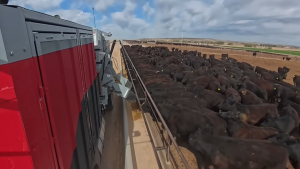
Founded in 2019, ALA Engineering is developing autonomous feed trucks designed specifically for cattle feedlots. The company has spent several years testing the technology and expects to have commercial autonomous feed trucks deployed in Nebraska next year.
Hansen said consumer-focused autonomy remains expensive and difficult to scale, while industries such as agriculture face workforce shortages and operational challenges that autonomous technology can help address.
“There are real-world problems that people are not able to fill labor positions for,” Hansen said. “They’re not able to maintain the right people to be able to train them to do it efficiently and safely.”
The company’s current focus is on feedlots ranging from 20,000 to 60,000 head, where the autonomous trucks can integrate into existing operations with minimal changes to infrastructure or workflow.
Hansen said agriculture offers an opportunity to apply emerging technology where it can provide measurable value while helping operations improve efficiency, accuracy and safety.
Although ALA Engineering’s first application is cattle feeding, Hansen said the company is also exploring additional opportunities in agriculture and other off-highway industries.
“We want to bring a lot of this technology into agriculture,” Hansen said.
The full conversation with Hansen is available on the Building Nebraska podcast, powered by the Engler Agribusiness Entrepreneurship Program at the University of Nebraska–Lincoln.