

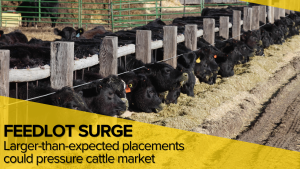
Larger-than-expected cattle placements and rising feed costs are adding fresh pressure to an already shaky week in the cattle market following Friday’s Cattle on Feed report.
David Ericson of Ag Optimus said the report came in “probably a little negative compared to expectations,” with April placements at 105.5% of a year ago versus trade expectations closer to 103%.
“The biggest thing is the weight on the market and the feeders due to the placement,” Ericson said, noting the largest group of placements came in the 800- to 899-pound category — cattle likely headed for the market this winter.
The report also comes after a bruising week in cattle futures.
“June live cattle closed nearly $6 lower on the week. August feeders were nearly $13 lower,” Ericson said. “The big question is how’s the market going to react?”
DTN Livestock Analyst ShayLe Stewart said the report “hit the marketplace like a Mack truck,” noting that placements rose 6% year-over-year and contributed to a broadly bearish tone across all major categories.
Stewart said drought conditions across the High Plains played a key role in the higher placement totals as some producers moved cattle earlier due to limited pasture availability. Nebraska was one of the few states not showing a year-over-year increase in placements, though she noted comparisons there are complicated by wildfire impacts this spring.
Ericson said rising corn prices could become the next major problem for feedyards if cattle prices fail to stabilize.
“Sometimes I think that the corn is kind of the forgotten variable in the cattle feeding equation,” he said. “If corn continues up and the cattle don’t find footing here … there could be a world of hurt coming down the road for the producer if they haven’t protected these cattle.”