

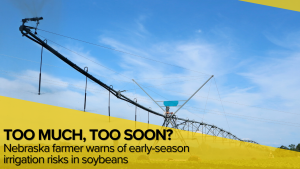
A Nebraska farmer is urging caution on early-season irrigation this spring, saying dry conditions and early planting are raising concerns that mirror challenges seen in 2023.
Mike Tomes, who farms near Utica, says the growing season got off to an unusually early start due to warm, dry weather, leading many producers to plant soybeans ahead of schedule.
“In 2026, we had a super early start due to the warm, dry weather. There seemed to be even more early soybeans planted this year as the trend has been,” Tomes said.
But he said the early moisture management decisions being made now could have long-term impacts later in the season, especially if irrigation is applied too aggressively before key growth stages.
Tomes pointed to guidance he received over the years from late University of Nebraska soybean researcher Dr. Jim Specht, who cautioned producers about overusing early irrigation.
“He warned soybean producers of the dangers of too much early irrigation. Hopefully we can receive beneficial rain soon to avoid the same situation this year,” Tomes said.
University of Nebraska–Lincoln research has shown soybeans are most sensitive to water stress during pod development and seed fill stages, when roughly 65 percent of the crop’s seasonal water use occurs. Studies across Nebraska showed that excessive irrigation during vegetative growth can increase vegetative growth without improving yield potential. Researchers also note early-season irrigation can contribute to conditions favorable for white mold and other disease pressure later in the season.
Tomes said disease concerns remain part of the decision-making process for growers this year.
“I think of those same fields for 2023, and we did have white mold and stem borer issues and how those same fields could be susceptible years down the road depending on your rotation. So we’ll have to be scouting for that at the same time and doing what we can to prevent those pests,” he said.